Is Invisalign faster than braces? Sometimes, but not automatically. Treatment speed depends more on your bite, the tooth movements required, case complexity, and how closely you follow the plan than on the appliance alone. For mild to moderate crowding, current research has not shown a consistent overall treatment-time advantage for clear aligners over fixed braces.
Key Takeaways
- Invisalign is not inherently faster than braces; mild to moderate cases can have similar overall treatment times, though individual plans vary widely.
- Invisalign treatment time depends on case complexity, the number and type of tooth movements, refinements, and consistent aligner wear.
- Braces can be more predictable for some complex movements because the appliance stays fixed to the teeth and does not depend on daily wear compliance.
- Wearing Invisalign for the prescribed time each day is essential because aligners can move teeth only when they are in place.
- The faster option for you should be chosen after a personalized assessment that weighs timing against comfort, lifestyle, bite correction, and long-term stability.
How Invisalign and Braces Move Teeth Differently Over the Course of Treatment
Invisalign and braces both move teeth by applying controlled pressure, but they deliver that pressure in different ways. Braces use brackets and wires that remain attached to the teeth, while Invisalign uses a planned sequence of removable clear aligners that are replaced as treatment progresses.
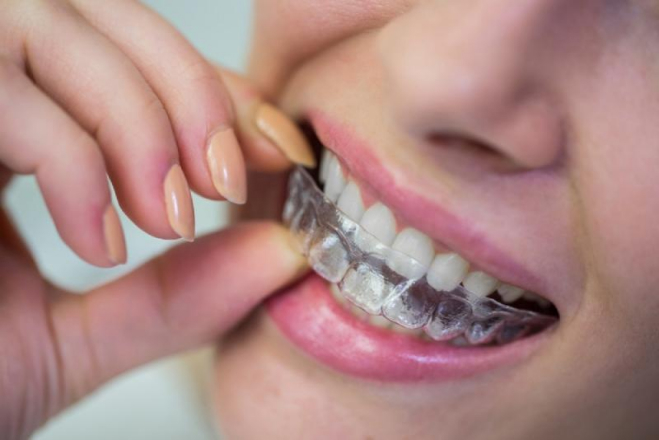
Invisalign refers to a system of clear, removable aligners that gradually reposition teeth according to a digital treatment plan. At You Make Me Smile Dental Centre, our Invisalign service uses digital planning to map intended tooth movements and create a sequence of aligners for suitable adults, teens, and children.
Traditional braces work continuously because the brackets and wires remain in place. Adjustments modify the forces applied over time. This fixed design can give the treating dentist more direct control over certain movements, while aligners offer removability and a less noticeable appearance.
A 2024 systematic review comparing clear aligners with fixed appliances for mild to moderate crowding found no significant difference in overall treatment duration. This is an important reason to avoid assuming that one appliance is always the faster teeth straightening option.
Typical Factors That Influence How Long Invisalign Treatment Takes
Is Invisalign faster than braces for a specific patient? The answer depends on how much movement is required, how complex the bite is, and whether the teeth track as planned through each aligner stage. A simple alignment case may progress differently from one involving significant rotations, bite correction, or multiple types of movement at once.
When patients ask, “How long does Invisalign take?” broad averages are less useful than a personalized plan. You Make Me Smile Dental Centre notes that most Invisalign treatments take about 6 to 18 months, depending on the case. Some patients may finish sooner, while more complex cases can take longer or require additional aligners called refinements.
Refinements are another timing factor. If certain teeth do not move exactly as planned, a new scan and extra aligners may be used to fine-tune the result. Refinements are normal in some cases, but they can extend the original schedule.
Why Braces May Be Faster or More Predictable for Some Orthodontic Cases
Braces may be faster or more predictable for some orthodontic cases because they remain attached to the teeth and deliver continuous, highly controlled forces. This can be useful when treatment involves complex rotations, significant bite correction, difficult root movements, or other movements that are less predictable with removable aligners.
If you are comparing Invisalign vs. braces treatment time, case complexity matters more than appearance or convenience. The American Association of Orthodontists notes that clear aligners do not work as predictably for every severe malocclusion or significant rotation, and that braces may be recommended for some cases that need more precise control.
When patients ask, “How long do braces take?” the answer varies. The American Association of Orthodontists gives a typical range of about 12 to 24 months, noting that minor corrections may take months and complex cases can take longer. Your own estimate still requires an exam.
A fixed appliance also removes one variable: you cannot forget to wear it. That does not mean braces always finish sooner. It means the appliance works whenever it is in place, which can make progress more predictable when removable aligner wear is difficult to maintain.
How Consistent Invisalign Wear Can Affect Treatment Progress and Timing
Consistent Invisalign wear directly affects treatment progress because the aligners can only move teeth while they are in your mouth. If trays are left out for long periods, teeth may not track with the planned sequence, which can delay a tray change or necessitate refinements.
The American Association of Orthodontists advises that clear aligners are typically worn for at least 22 hours a day, with removal for eating, drinking anything other than water, brushing, and flossing. Your own dentist may give you specific wear instructions, and those instructions should guide your routine.
This is a major practical difference between Invisalign and braces. Invisalign can be removed for meals, oral hygiene, and occasional events, but that flexibility also creates responsibility. Treatment speed depends partly on wearing the aligners as prescribed day after day.
If your schedule makes consistent wear difficult, tell us during treatment planning. A clear conversation about your routine can help determine whether Invisalign, dental braces, or another approach offers a more realistic path to steady progress.
How to Compare Treatment Speed With Comfort, Lifestyle, and Case Complexity Before Choosing
The fastest orthodontic option is not automatically the right choice for every patient. A useful comparison weighs treatment speed against case complexity, comfort, appearance, eating habits, oral hygiene, appointment needs, and your ability to follow the treatment plan consistently.
Invisalign may be a good fit for a busy adult or teen who values a removable, discreet appliance and can consistently wear the aligners as directed. Braces may be a better fit when the case requires more complex tooth movement, when fixed treatment offers more predictable control, or when daily aligner wear would be difficult to maintain.
At You Make Me Smile Dental Centre, patients can explore both Invisalign and dental braces close to home in Belleville and Trenton. We provide a clear treatment map that explains the movements needed, estimated timing, and practical differences before you commit.
Our financing and insurance information can also help you understand how coverage, predeterminations, and payment planning may apply. Treatment speed matters, but a plan you can comfortably follow is more likely to keep you on track.
Frequently Asked Questions
Is Invisalign Faster Than Braces?
Not necessarily. Some straightforward Invisalign cases may finish sooner, but research on mild to moderate crowding has found similar overall treatment duration between clear aligners and fixed braces. Your actual timeline depends on the movements required, case complexity, and how closely the treatment plan is followed. A personalized assessment is the best way to compare treatment timing for your teeth.
How Long Does Invisalign Take on Average?
Invisalign treatment time varies by patient. You Make Me Smile Dental Centre notes that many cases are planned for about 6 to 18 months, though simpler cases can be shorter and more complex cases may take longer. The number of aligners, bite correction, tooth movement, refinements, and consistent daily wear can all affect the final timeline.
Why Might Braces Be Faster for Some Patients?
Braces may be faster for some patients because they remain fixed to the teeth and provide continuous control for complex movements. Significant rotations, difficult bite corrections, or movements that are less predictable with removable aligners may respond more efficiently to fixed appliances. The advantage depends on the individual case, so braces are not automatically faster for everyone.
Does Wearing Invisalign Consistently Affect Treatment Speed?
Yes. Invisalign can only move teeth while the aligners are worn, so inconsistent wear can slow progress or cause teeth to stop tracking the planned sequence. Clear aligners are commonly prescribed for about 22 hours per day. Following your dentist’s wear and tray-change instructions is one of the most important ways to keep treatment on schedule.
Which Is Better for Busy Adults, Invisalign or Braces?
Either option can work well for busy adults, but they suit different routines. Invisalign is removable and discreet, which can simplify meals and oral hygiene, but it requires consistent daily wear. Braces stay in place and remove the need to remember aligners, although they are more visible and require care around brackets and wires. Your case complexity also matters.
How Do I Know Which Option Is Faster for Me?
You need a personalized orthodontic assessment to determine which option is likely to be faster for you. Your dentist will consider crowding, spacing, bite relationships, tooth rotations, the required movements, and whether aligner wear is realistic for your routine. Ask for an estimated timeline for both appropriate options so you can compare speed with comfort, convenience, and treatment predictability.
Conclusion
Is Invisalign faster than braces? The most accurate answer is that either option can be faster depending on the case, and current evidence does not support a universal speed advantage for aligners. You Make Me Smile Dental Centre can compare the tooth movement your teeth need, your lifestyle, and the daily involvement each option requires. Every smile tells a story, and the right orthodontic plan should give you a clear path forward without guessing about the timeline. Book Your Free Consultation Today at our Belleville office or our Trenton office to compare Invisalign and braces for your smile.